


- How to Make a Burlap Wreath – 3 Easy Styles! - May 30, 2022
- How to Revive Wilted Hydrangeas – Guaranteed! - July 28, 2021
- Easy Canvas Painting Ideas – 30+ DIYs for Beginners - June 16, 2021
No need to be intimidated, getting started with acrylics on canvas is simple! Here are all the best easy canvas painting tips and ideas.
Painting with acrylics is way less complicated than you might think! You don’t need innate painting skills or official artist training to create decorative canvas paintings. Acrylics are fun, flexible and forgiving! And its definitely easier and less messy than oil painting.

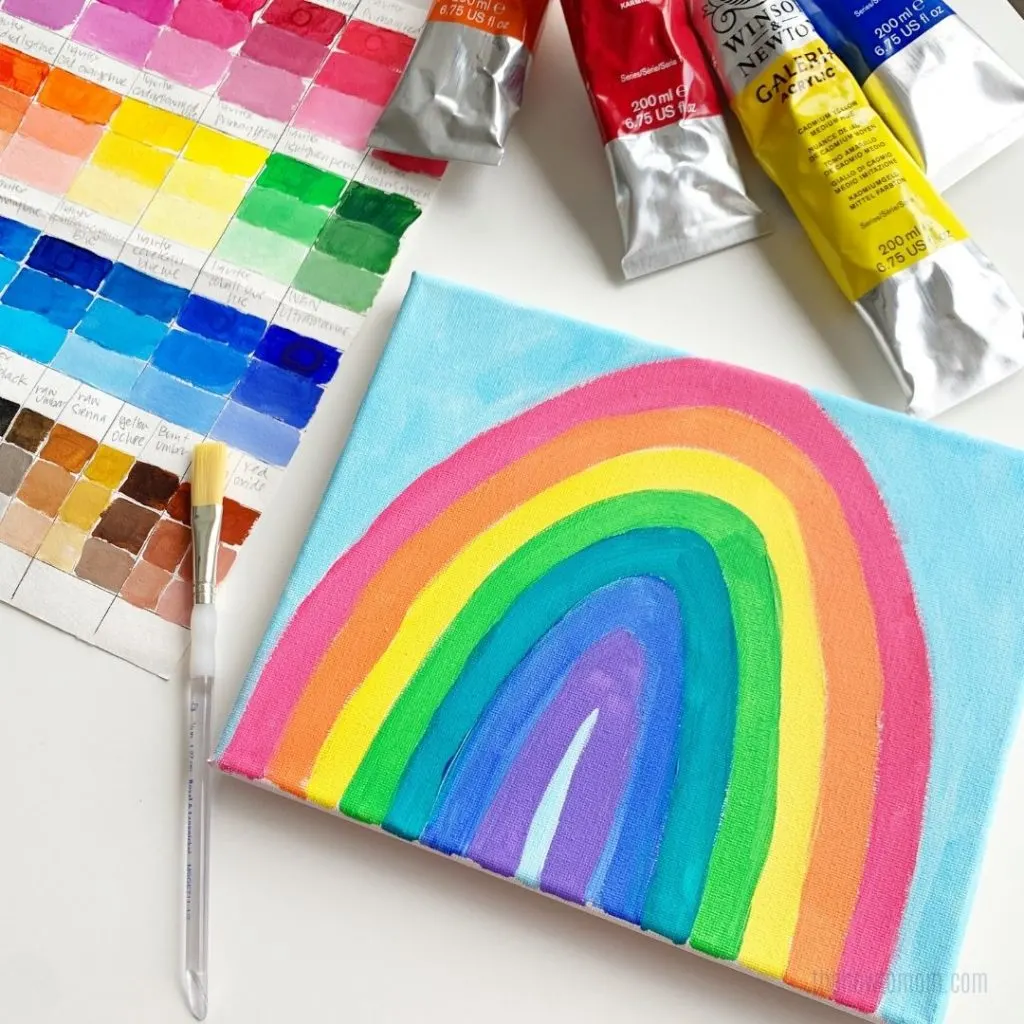
Acrylic painting is great for beginners, but surprisingly many professional artists prefer using acrylics as well. The colors are vibrant, easy to mix, easy to use and easy to clean up.
You can get started making your own easy canvas painting with just a few basic supplies and tips.
This post contains affiliate links. I may receive a small commission if you choose to buy. Thanks!
Types of Acrylic Paints
The term “acrylic paint” can apply to craft paint or the kind that artists use on canvas. Confusingly, there isn’t a better term for the latter. So its either “acrylic craft paint” or just “acrylic paint”.
Acrylic craft paint is the runnier stuff that comes in bottles, and. is available in hundreds of colors. Its fairly inexpensive at $1-$3 a bottle. Acrylic craft paint is used for tons of craft projects like painting on wood or ceramics, and since the consistency is thinner and more liquid, it works well for easily covering a large area. Acrylic craft paint is great for kids projects because it cleans up easily. When your kids are a little too old for the tempura paint, and you’re ready for the next step, craft paint is your best bet.
Acrylic paint for artists is thicker and generally comes in tubes, though there are professional acrylic paints in bottles, used for “drip” effects. Acrylic paint for artists usually comes in “levels” from student to professional, and the prices correspond accordingly. The professional acrylic paints have a nicer texture/consistency, and often have a more consistent, opaque coverage and are less transparent. The pigments used in professional acrylic paints are a higher quality, and to a trained eye, they mix better and can offer a more vibrant spectrum of colors.
That all being said, if you’re just getting started with acrylic painting, a “student” set of acrylic paint tubes will definitely be adequate. The following options would be a great starting point, and have a fun selection of primary and secondary colors.
- Liquitex BASICS Acrylic Set of 24 (Available at Michaels)
- Arteza Acrylic Paint Set of 24 (Available from Amazon)
I started with a student set of Liquitex acrylic paint. It was good to be able to get a feel for the colors and how they mix. And to see just how much I was going to really get into painting as a hobby. As I have added to my acrylic paint collection, I have been buying more Windsor and Newton Galeria paints. I like the shades and the thickness. And I kind of like the classic aluminum tube, it makes me feel like a real artist. haha
I watched the sales at the craft stores, and would buy more tubes of acrylic paint when they were having a BOGO deal or a 50% off sale.


I like to buy the big Liquitex BASICS tubes of paint for when let my kids paint with me. The Liquitex paint is a bit cheaper, and my kids like the colors they come in.
Mixing Acrylic Paints
Learning to mix colors is a fun and also sometimes frustrating process. Welcome to the color party! We all learned about primary colors in grade school, and how to make any color (in theory!) from mixing red, yellow and blue.
Buuuuut, when we’re dealing with paints instead of light, its a bit trickier. Some yellows are more warm, some are cooler, same thing with reds and blues. And so if you want to make a bright, crisp green, and you use a warm yellow, it’ll end up really muddy, because of the slight reddish undertones of the yellow. You need to use the either the warm or cool option depending on which way you want to go on the color wheel.
- Vibrant purple – use a cool red and a cool blue.
- Bright orange – use a warm red and a warm yellow.
- Fun aqua – use a warm blue and a cool yellow.
- Crisp green – use a cool yellow and a cool blue.
Basic Primary Colors I Would Suggest:
Moral of the story, if you do want to use only primary colors, you’ll want to get a warm and cool shade of each.
- Cadmium Red Medium Hue (warm)
- Primary Red (cool)
- Cadmium Yellow Medium Hue (warm)
- Primary Yellow (cool)
- Cerulean Blue Hue (warm)
- Ultramarine (cool)
You’ll also want all the basic browns:
- Raw Umber (brown with grey undertones)
- Burnt Umber (a great basic brown)
- Raw Sienna (reddish clay color)
- Burnt Sienna (deeper, more pink version of brown)
- Red Oxide (a dusty, dark rose color)
- Yellow Ochre (a pale straw color)
And of course, you’ll need
- Black paint
- White paint
Optional Additional Acrylic Paint Colors to Buy:
If you want to add some more fun options to your color palette, I would also suggest:
- Phthalocyanine blue (and phthalocyanine green is really fun too!) to make vibrant aquas, teals and mints – I just call it pthalo blue, its such a long weird word!
- Cadmium Orange Hue makes great bright orange and coral shades
- Hookers Green is a lovely green for grasses and trees
- Permanent Magenta (for pinks, purples and raspberry colors)
You can see all of these colors in my mixing guide pictured toward the end of the post.
Good Starter Acrylic Sets
Again, here are my top suggestions for basic acrylic sets:
- Liquitex BASICS Acrylic Set of 24 (Available at Michaels)
- Arteza Acrylic Paint Set of 24 (Available from Amazon)
Additional Acrylic Painting Supplies
Of course you’ll need more than paint to get started, you’re going to need some canvas, brushes and maybe a couple other things.
Best Canvas for Beginners
Just like the paints, canvas comes in a range of qualities and prices, from student to professional. At this point, I stick to the cheapest student canvases I can find. I’m usually just playing around, so I’d rather have a stack of cheap canvases I can practice on, rather than stress about “getting it right” with a nice expensive canvas.
Canvases come in an ENDLESS selection of sizes, from 2×2 inches to huuuuuge gallery sizes.
It is also possible to find canvases in a thinner wrapped “panel” style. They are only about 1/4 in thick, and typically come in a 5×7 or an 8×10 and I’ve seen them even at the Dollar Store. When I’m painting with kids, or just playing around with colors, these are my go to canvas. They’re much thinner to store, and much less expensive.
Here are my go-to canvas options, with links all from Michaels. They frequently go on sale, or you can use a coupon.
- 10 Pack of 8×10 canvas (also available in other sizes)
- Level 1 Stretched Back Canvas (available in dozens of sizes)
- 5 pack 5×7 panels (available in other sizes)
Best Brushes for Beginners
It’s mind boggling that brushes can range in price from pennies all the way to like $140 for one paint brush! Is it made with unicorn hair?!? Maybe a real pro could appreciate a super fancy paint brush, but you and me? I think we’re fine with some basic paint brushes.
I like to start with a combo pack of brushes to get a feel for what works best. Its nice to have some different bristle, size and shape options to choose from.
- Super Value 50 Piece brush set (I have these and they’re a great starting point)
- Zen 5 piece brush set (nicer, smaller set)
- Flat Brush set (for large canvas painting)
Acrylic Brush Care
So acrylic paints are water soluble, which makes cleaning brushes MUCH easier than oil paint (which requires stinky chemicals!). To clean your brushes, simply rinse them thoroughly in warm water, until the water runs clear.
Then lay flat to dry on an old towel or paper towel. Or some times I like to use a cabinet to hold them upside down to drip dry.
When you’re painting, try to not get the paint all the way up to the metal piece that holds the bristles, because paint can get stuck up there and stain the brushes or cause them to be stiff.
Alternatives to Brushes
Brushes aren’t the only way to paint! Palette knives, sponges and tools for spraying or dripping paint can be a fun alternative to brushes.
Palette knife
You may also like having a palette knife, which is used for mixed paint, and also can be used in place of a brush to get a cool texture with thicker acrylic paints. They come in a selection from thin and bendy, to more stiff, and also come in a variety of shapes.
Sponges
Sponges can also be a fun way to add texture and blend colors. There are lots of options and sizes available.
Palettes
There are lots of palette options out there. Ones with wells, flat with a thumbhole, disposable paper, stay-moist, you name it.
Want to know what my favorite palette is? Paper plates! Yep, they’re cheap, have a white background, and work great. And the best part: zero cleanup! Just throw it away when you’re done.
But if you want to be fancy, I like this 20 well palette, and also this flat palette.
Acrylic paint is water soluble, so it cleans up fairly easy with water. To clean a palette, you can either wash it off while the paint is still wet, or you can let it dry and then peel the paint off (which is oddly satisfying!).
I have also tried this Sta-Wet Palette, which is a whole system for keeping paint fresh and moist for days. If you have a project that you will be working on for a few days in a row, this palette is super handy for keeping paint usable for extended periods of time. So you can mix your colors once and use them for multiple days, instead of having to re-mix and match colors each time you want to add to your piece.
I found that I didn’t paint consistently enough to use it, and my paint and sponge molded in my Charleston humidity. Yuck.
Easels
There’s nothing like a nice easel to make you really feel like a legit artist! Often I just paint on the floor or at a table, but sometimes it is fun to have an easel. There are basically floor models, for painting standing up, and tabletop options that work well for sitting. Some easels just prop up the canvas, and some have shelves and hooks and tubs for storage to make you feel a bit like Bob Ross!
- Basic floor easel with telescoping legs
- Fancy floor easel with brush holder tray
- Fancy floor easel with storage drawer
- Basic tabletop easel
- Fancy tabletop easel
Mediums and Varnishes
Admittedly, I don’t know much about mediums and varnishes. I just haven’t used them much. For the beginner artist using acrylics, they aren’t really necessary. They definitely are important for oil paints, but acrylics aren’t as fussy. Mediums can change the texture or opacity of the paint, and speed up or slow down the drying time. Some mediums thin out paint, or make them thicker.
How to Get Started with Painting Acrylics on Canvas
I so badly want to say, JUST JUMP IN! But I get it, sometimes its intimidating to start a new hobby or learn a new skill. You really could just get your paints out and start playing around. But if you want some guidance, I can help.
Get familiar with your paint colors
Its one thing to look at the tubes of paint, its another to actually see them in action. Go through your whole set and dabble and paint a bit of each color to see what they look like.
Make a Color Reference Guide
Artists use color mixing guides to easily be able to see what different colors are available to them. Its a great way to see at a glance what color you’re looking for, like which blue matches the sky you’re working on.
